Showing posts with label reading. Show all posts

Thursday, April 27, 2017

Integrate Science with Reading and Writing {FREE Activities Included!}

Ideas by Jivey shares through video and free activities how to use one book (What Do You Do With a Tail Like This? by Steve Jenkins) to teach science, reading, and writing standards in first and second grades! Using mentor texts can truly cover so many standards!

Hey, teacher friends! It's Jivey from Ideas by Jivey, and if you know me, you know I am PASSIONATE about integrating with mentor texts as much as possible! In this post, I will be sharing how to use a great book for reading and writing while teaching about animal adaptations or attributes:

**The above link is an affiliate link. 
The few pennies I earn on each purchase goes towards future giveaways!**


What Do You Do With a Tail Like This? by Steve Jenkins and Robin Page is a fantastic book to use to expose students to animals they most likely have never seen in real life. It's a great book to use across K-5, but the activities I'm going to share with you in this post are perfect for grades 1 and 2. 

As you read the book the first time, allow them to make a guess at the animal that belongs to the features shown on each page. When you turn the page, it shows the whole animal and describes why that feature is important for the animal. This would be a great opportunity to allow them to write down something new they learned about some of those attributes, or animals. 

There are also SEVERAL animals in the book that have some similarities, as well as differences. Use this book to compare animals, not just with the text, but the pictures of the animals, too!

You will find a video below of me walking you through the book and the comparison activity. This was originally posted as a Facebook Live video, so ignore when I talk about links in the description. :) You will find the "links" below this video instead!


As promised, you can pick up free activities for this book for first and second grade below!


If you teach about animals in first or second grade, you might also love this Animals Reading and Writing pack that provides activities similar to the ones I've shared in this post, and you can even integrate grammar with those same fabulous nonfiction mentor texts in the reading and writing pack by using mentor sentences:


Ideas by Jivey shares through video and free activities how to use one book (What Do You Do With a Tail Like This? by Steve Jenkins) to teach science, reading, and writing standards in first and second grades! Using mentor texts can truly cover so many standards!

Monday, April 24, 2017

Books to help you recharge over the Summer

Hello Friends, it's Erin from The Elementary Darling. The countdown is on! I have about four weeks left before the end of the year, and this is the time that I start planning for the summer and organizing for the beginning of the year. I know some of you are thinking, "She is crazy!" and I might be a little bit, BUT the end of the year is the best time to organize and plan.  Last year, I wrote this post about what I do a the end of the year, and Kristin wrote this post, about planning during the end of the year.

But TODAY, I am going to show you my favorite professional development books. Obviously, I would recommend checking out one or two based on your needs, however they are ALL amazing!


For the teacher that needs to RECHARGE

I love anything written by Ron Clark, but Move your Bus is my favorite. I reread it often to remind myself to be a runner! If you don't know, his co-owner of The Ron Clark Academy is Kim Bearden, and her book, Crash Course will remind you why you went into teaching. It is my ultimate favorite! I also recently found the book Conscious Discipline, thanks to my friend, Theresa from True Life I'm a Teacher. This book is all about teacher mindset. I just started it, and I am loving it!

Throughout this post, you’ll find Amazon Affiliate links. This means I receive a small commission if you purchase something through that link, at no extra cost to you, that helps keep my blog running and helps fund giveaways!


For the teacher beginning Reading Groups

These books are good for reading groups, or ideas for your groups. Even if you have been implementing reading groups for several years, I know you will find something useful in them! These two books are my everything when it comes to Guided Reading. Jan Richardson has everything you need, including strategies and printables in this book for every level of guided reading. The Daily Five book is great for anyone who uses a grouping method for reading.  I also LOVE Word Nerds. This book has amazing ideas for vocabulary instruction. While I would recommend it for 2nd grade and above, it could be modified for Kindergarten and 1st grade.


For the teacher looking for Math Group ideas

I LOVE this book! Debbie Diller is an amazing math group guru, and she has fabulous ideas in this book! It is for grades K-2, so if you have a book suggestion for 3-6, I would love to hear it!


For the teacher looking for Differentiation Ideas 

If you are a GenEd teacher and you have a huge range of student abilities in your classroom, these are my top picks! I got my gifted endorsement several years ago and the book, Teaching Gifted Kids in Today's Classroom is my all time favorite. It has so many suggestions to extend the learning of higher level students.  Advancing Differentiation and How to Differentiate Instruction for Mixed Ability Classrooms are both amazing and so helpful when your classroom ranges in ability levels.


For the teacher looking for IDEAS or Strategies

How many times have we all run out of ideas or needed new fresh strategies for teaching a topic?  I recently found these books this year, and I never knew what I was missing. THEY ARE SO GOOD! You can use these books no matter what ELA format you use. It is literally a book full of strategies for every level. They do cost a little more, but honestly, they are worth EVERY penny. You can find the reading one here and the writing one here. These two will be the ones that I will be reading over the summer!

What professional development books will you dive into this summer? Whether you are reading to recharge, learn new strategies, or try a new method, these books will help you achieve your goal! Do you have an awesome book that I didn't show, leave it in the comments below! Happy Reading!


Thursday, March 16, 2017

March Reading Challenge


Hello to Spring!

I love this time of year as the flowers emerge from their winter beds and cherry blossoms bloom with such eye-catching colors. Spring is a time for renewal and possibilities. The school year isn't quite over, so why not catch your students' interests in a Reading Challenge? March is National Reading Month, by the way.

I have an idea to share with you that I usually start at the beginning of the year to help the students branch out with their reading interests. But it will be perfect for this time of year to get them thinking outside of the Reading Box.

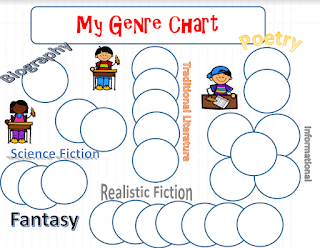
If you click on the image below it will take you to a Google Doc that you can download and share with your kiddos.

https://drive.google.com/file/d/0B_ZStSfotwLiVDF0Z01ON0NDT00/view?usp=sharing


You can set a time limit, such as by the end of the month, in order to complete the challenge. There are several genres with various numbers of circles to fill in for each. I have mine write the title of the books they read and then color in to show they have completed it. If you'd like, they can start thinking of some books they'd like to read and maybe write in the titles ahead of time and then be able to color them in when they've read them. Remind them not to color too darkly to cover over their titles.

You could create a class chart to hang in the room. Students can color in a graph with different colors for each genre above their name to challenge each other to read more.

Prizes such as a small take-home book you can pick up at Goodwill, or Dollar Store treats can be handed out for those students who complete so many books by the end of the time you set.

Let me know how this works out for you. I'd love to hear what creative ways you encouraged your students to read this month!


Something to pin...


Sunday, January 8, 2017

The Do's and Don'ts of Guided Reading

Since it is about midway through the year, how about we do a guided reading refresh? December was always so crazy, that my reading block was often affected. January was a nice, fresh, blank slate where I was ready to really dive back into guided reading.


Now here is a little disclaimer: These Do's and Don'ts of guided reading ARE my opinion.  Some of them ARE backed by research.  Others are backed by experience. I DID complete my Master's Degree in Reading, so I have been "around the block."  HOWEVER,  as with anything on the internet, take these with a grain of salt when consider your students, your classroom, and your school.

Let's do this!


DO: BE PREPARED. READ THE BOOK IN ADVANCE.

DON'T: PICK A BOOK AND JUST "WING IT" WITH KIDS.

Without a doubt, the teacher should always be prepared before guided reading.  This means reading the book BEFORE groups begin and creating a plan of instruction. Consider any vocabulary you want to highlight and any comprehension or decoding strategies you can teach and practice. If you need some guidance on what to include, check out these FREE guided reading lessons for transitional readers (Levels J to P) I adapted from Jan Richardson's book, The Next Steps in Guided Reading.


DO: KEEP GUIDED READING GROUPS RELATIVELY SHORT AND STRUCTURED.

DON'T: HAVE 35 MINUTE LONG GUIDED READING GROUPS WHERE YOUR INDEPENDENT KIDS ARE FALLING APART AND YOUR KIDS IN GROUP HAVE A HARD TIME STAYING FOCUSED AS WELL.

Guided reading time should be relatively short and efficient.  Each group should be about 25 minutes long at the most (this can be hard with the big kids- I struggled with this, too). If you are teaching kindergarten or first, they may be a bit shorter due to attention spans, text level, and just developmental appropriateness.

If you are looking for WHAT to do during this time period, check out my blog post on the "anatomy" of a guided reading group. Lots of freebies are included!


I once heard an awesome Lucy Calkins quote about routine in regards to Workshop.  I am going to butcher it because my memory is terrible! I think she said, "Writing Workshop is deliberately predictable so the unpredictable can happen." She also compared the routine and structure of a laboratory to the classroom. This routine and expected structure allows for the unexpected to spark!  This is just like guided reading.  By having set routines (which in turn, can help keep the group time short), students can use their time to THINK and LEARN rather than wonder about what will happen next!


DO: FIND APPROPRIATE LENGTH TEXTS THAT ARE ON THE STUDENT'S INSTRUCTIONAL READING LEVEL.

DON'T: CHOOSE BOOKS THAT ARE TOO LONG OR TOO EASY/ HARD.

Text selection is so important in guided reading.  First, make sure the text is an instructional level text for students.  There is no point in pulling students for groups to read a text that is too hard or too easy (UNLESS the focus is solely on fluency- then as independent text is appropriate).

I prefer to use books in groups. I was very lucky to work in districts that valued guided reading and provided extensive leveled libraries for teachers. If your school does not have a leveled library for you, consider finding printable leveled book.  Reading A-Z is a paid membership site with printable leveled books. Our school actually paid for a membership, so you may want to approach your principal.  I have written several leveled texts that are available in my store. All of the ones pictured below are part of a series.


You may also want to consider poems and passages.  I have several in my store and Readworks.org is a fantastic site with leveled FREE passages.


This is a series of texts with multiple levels of the same passage.  I have tons of different topics available in my store.


This is a personal opinion, although Jan Richardson's mentioned this in her book (Yay!).  I don't believe that (larger) chapter books are the best use of guided reading time.

DISCLAIMER: Easy/ early chapter books like Henry and Mudge, Frog and Toad, etc. are not included in this blanket statement because they can be read in 1-3 groups settings.  I am talking about the longer books that will take WEEKS to complete.


Let's break it down.

If guided reading groups are short, then you will only have about 20 minutes of reading time a day.  It will take a million years to finish a chapter book.  If you ask students to read outside of groups so you can "get through" the book faster, and discuss during guided reading groups, then kids are reading an independent level text...which is not guided reading. That is more like a literature circle.

There are times when reading chapter books ARE appropriate such as an interactive read aloud, book clubs, reading conferences, reading partnerships, and literature circles.  I just don't feel the guided reading setting is that time. And to be totally honest, not ALL students were in guided reading groups in my classroom.  Some years I did guided reading groups with some kids and literature circles with others. Not everybody did the same thing some years! I did this (partnerships, literature circles, and guided reading) all during the Reading Workshop.

The difference between literature circles and guided reading (in my opinion) boils down to the amount of support given to the reader. While the names may feel interchangeable, they really are not. This matters because it simply might matter to your district or admin! LOL!

If you are struggling with guided reading, I did a Facebook Live several months ago with more DO's and Don'ts.  You can catch the video here.


If you feel you need more support when planning guided reading, check out my Guide to Guided Reading!


If you would like more ideas from The Primary Peach, be sure to follow us on PinterestInstagram, and Facebook to catch all the freebies and ideas and more!

PIN FOR LATER:


Thursday, October 20, 2016

The Widow's Broom - Text Dependent Questioning


Greetings!

It is I, Gary, from ScrappyGuy Designs.    The month is October, the leaves are falling, the moon is full in the inky darkness above. Perfect timing for a spooky tale!

I love this time of year. In Atlanta the mornings are cooler as I walk to work, yet on the way home the jacket is off as I sweat my way back. Halloween is my second favorite holiday, right next to Christmas. I think it has something to do with my upbringing. My family loves horror movies and we often have competitions to see who can bring the scariest ones to watch whenever we get together.

I've learned to tone down the graphic and gore in my teaching, but I still love the spine-tingle. That is why I love sharing The Widow's Broom by Chris van Allsburg with my students.


I could go on and on about the amazing artwork presented in a sepia pointillism that does incredible things with light and shadows. The sense of movement is absolutely palpable in various illustrations. Such as this one:


But that's not my focus for today's lesson. It's about the spooky tale woven by Mr. van Allsburg about a shy, lonely widow who discovers an injured witch in her garden one morning. She helps the witch in her recovery. The witch disappears as quickly as she arrived, but she leaves one thing behind.

Her broom.

Thus begins the tale of Widow Shaw and her relationship with a magical item. My students love discussing this book. Especially the meanness to the broom instigated by the Spivey neighbors. Watch out for van Allsburg dog, Fritz, to make an appearance!

My school does a lot of work with Text Dependent Questioning. 'Common Core expects students to use evidence from texts to present careful analyses, well-defended claims, and clear information. A central tool to help students develop these skills is text-dependent questions: questions that can only be answered by referring back to the text.' (http://achievethecore.org/category/1158/ela-literacy-text-dependent-questions)

I've got a spooky treat for you. Here's a preview of the questions I ask my students about this book.

https://drive.google.com/file/d/0B_ZStSfotwLicEhvYXgySjVxWkk/view?usp=sharing


I've also put some of the questions together on a net of a cube that you can cut out and glue together to make a dice for students to work together in a group to answer the questions. You can click on either picture and it will take you to the downloaded materials for your records.

https://drive.google.com/file/d/0B_ZStSfotwLicEhvYXgySjVxWkk/view?usp=sharing


Your students will have fun rolling the dice and discussing their impressions of the book using evidence from the text to prove their points.


Hopefully you will have fun this October watching your kids enjoy this book. Definitely check out Chris van Allsburg's other titles. There's always more than meets the eye!


Sunday, October 2, 2016

Fabulous Fall Mentor Text: Scarecrow

I absolutely LOVE the author, Cynthia Rylant. She has so many fantastic books to use as mentor texts! One of her gems is perfect for this time of year:

WHY I LOVE THIS BOOK:

Cynthia Rylant uses fantastic figurative and poetic language to bring this scarecrow to life. Students get to "see" what a scarecrow sees and "feel" what he feels. It's definitely a great book to use when teaching about point of view. Best of all, it's a book that's great for ALL ages! 

READING IDEAS:


These activities are perfect to use as whole group mini-lessons when using the book, Scarecrow by Cynthia Rylant. 

SUMMARIZING

This is a very simple book to summarize, so it would be great to introduce the concept for lower grades, or to review summarizing in the upper grades. 

USING EVIDENCE TO PROVE AN INFERENCE

Students can find many pieces of evidence that the scarecrow enjoys his life, as Cynthia does such a great job of showing life from the scarecrow's eyes. As you do a second read of this short book, have students listen and note evidence in the book that shows the scarecrow enjoys his life. 

VISUALIZATION

Cynthia Rylant uses such beautiful language in this book- allow students time to draw what some sentences from the book help them visualize. This will help them see her craft and will link wonderfully to a writing lesson as well: use "Show Don't Tell" style in your writing!

WRITING IDEA


As I mentioned above, use this book to help students see great examples of "Show Don't Tell" writing style, and then try it out in their writing. Students can imitate the book, Scarecrow, by writing a story as though they are a scarecrow.

Would you love to use all of these ready-made activities for this fabulous fall mentor text? Grab the freebie below! :)


Enjoy! Happy Fall!

PIN FOR LATER:


Monday, April 4, 2016

Spring into April: Making the Most of Share Time


It is so hard to believe April is here!  Just a few more weeks and SUMMER, oh glorious SUMMER, will be here.  Not that we are counting, right!?!?


I know that April can be a tough month.  Spring break and testing can really throw a wrench in daily routines.  Not to mention all the special events looming. Let's see... Field Day, Career Day, end of the year party, and I could go on and on.

One routine that is so easy to lose in the shuffle is share time for writing.  It is so important for kids though. It validates them as authors and allows them to celebrate learning, as well as seek advice from peers.


So, how can you make the most of share time, when time is SO precious at this time of year? Here are a few ideas!


Is time short?  Can you barely fit in the five minutes of share time in your reading and writing workshops to begin with?  I highly suggest using a very predicable structure with ingrained routines

 When I taught second grade, my kids came to the carpet and sat in a circle.  This way we could all look at each other, and not just me, the teacher! LOL! They brought their writer's notebooks and a pencil.  The writer's notebooks and pencils HAD to lay in the floor in front of them and their hands in their laps. If they were playing with their notebooks or pencils, they went back to their seats.  I was a meanie on this one #sorrynotsorry. I didn't have an author's chair.  Honestly, any extra movement just took time.  We shared from our spot on the carpet.

I love this anchor chart with procedures for the author's chair.  Although, we didn't have a physical author's chair, the procedures were pretty much the same.


Sometimes, when I was conferencing with students I would ask them to share during share time.  Often, this was because they had done a really good job of applying what had been taught in the mini lesson.  It was also a good way to celebrate struggling writers that would not volunteer on their own.  It prepared them for the share time, so they knew exactly what they would say before we ever sat down in the circle.

We were also really specific in what we shared.  Students could read their stories. Then, they could ask for specific help.  This worked best with my gifted students.  They often knew what they wanted the outcome of the writing to be, but weren't sure exactly how to get there.  They were often able to explain this to classmates and get feedback.  They REALLLLLLY liked helping each other!

Looking back, I should have had these sentence stems to help kids give each other appropriate feedback.   These look great.


I love how this one has expectations AND the sentence stems together.  Very smart.


This one is pretty and has suggestions on complementing and  how improve a peer's writing.  


Some of my friends loved to share.  Others?  Not so much.  They would rather pick at the carpet and melt into the background. I get it.  Sharing can be stressful for some kids.

However, I did feel like all students need the chance to shine.  To make sure that all students had an opportunity, I simply kept a class list on a clipboard by the carpet. Whenever students shared, I jotted the date next to their name.  This helped me remember to call on some kids that rarely shared.  


Looking for ways to change up share time?  Maybe it is getting stale by this time of the year.  Consider these suggestions:


Let EVERYBODY have a chance to share their work or writing by pairing kids up. You can make this as structured as you want.  You can set a timer and when the timer dings, the students must switch so the other partner has time to share.  This keeps one partner from dominating. I would suggest keeping pairs about equal, as far as ability.  This does not embarrass a struggling writer and frustrate a gifted writer. Also, often gifted students tend to push and challenge each other.


I loved this chart with guidelines for writing buddies or pairs because it gave them sentence prompts and also suggestions of what to fix.


This doesn't need much explanation.  Have small groups of students share.  This can be the table groups they already sit at our you can mix it up a bit.


A gallery walk is always fun this time of year. In this activity, students leave out their writing and classmates rotate around the classroom and comment on each other's writing. I find that this works best with an end of unit activity or a final draft.  We sometimes did these as our publishing parties.  

Students each got a lunch bag and a small stack of blank papers. They would leave out their writing.  Students would rotate around the classroom and comment (using the same procedures for positive feedback as whole group share) on the small slips of paper.  The slips then went in the paper bags so they didn't lost.  I kept the rotations structured and we switched seats at the ding of a bell, like we did when we played Scoot.

When we were done, students could read the feedback in their paper bags.  It was a lot like Valentine's Day! LOL

Do you have any other ideas or suggestions for share time?

For even more ideas from The Primary Peach, be sure to follow us on InstagramPinterest, and Facebook to catch all the latest news and updates!

PIN FOR LATER: