Thursday, March 23, 2017

Spring Break and Beyond


Hello.  I am Tami from Kamp Kindergarten.   I am going to be discussing a topic near and dear to most teachers at this time of year---Spring Break. 

No matter how much we love our little learners, most teachers are more than ready for Spring Break when it finally arrives.  I know that was certainly the case for me.  Then, when I was on break, what was on my mind?  School, of course.  Specifically, what activities could I plan to make the final weeks fun for my students?  Whether we stay home and recharge or spend a few days away, we still think of our little ones.

While Georgia is a large state, we are blessed to be located within reasonable driving distance of several desirable vacation destinations. Forests, mountains, caverns, lakes, beaches, and even Orlando, FL tourist destinations can be reached in a day’s drive from most Georgia locations.

Many Georgia families visit beaches either in Georgia or neighboring states for spring break.   If you are like me, finding seashells is a fun part of visiting the beach. No matter how many shells I have, I always find more.  I have found that using some of the shells at school is a great way to engage little ones during the last few weeks of school when they are so over anything we have been doing all year long.


Shell Sorting


One simple way to use the shells is in a tray or container of sand.  Children can sort the shells, order them by size, or simply enjoy the sensory aspect of touching the shells and sand or moving the shells about in the sand.

Putting Shells in  Numerical Order

Use a Sharpie and write letters or numbers in the shells. 
Turn the shells over and place them in the sand so the writing is not visible.  If you like, you may bury them in the sand so students dig through the sand and search for the shells. After finding the shells, students place them in alphabetical or numerical order in the sand.

PLEASE NOTE:  The writing will not come off the shells.  Consider that when selecting ones you want to use for these activities.  

Using Shells to Practice Addition Facts


You may write an addition or subtraction equation on one shell and the sum or difference on another. Put the shells in the sand tray and let students search for the shells.  After finding the shells, students match the equations to the answers.

Using Shells to Make Words for CVCe Ocean Write the Room FREEBIE


Shells with letters may be used for word work and word building activities.  You may use any word cards you already have in your classroom.  Click on the links to download the free cards pictured.

Using Shells to Spell Words for CVC Spell the Room FREEBIE


Shells may also be used in lieu of clips to mark answers on clip cards.   You may use clip cards you already have in your classroom or click on the links to download the free cards pictured.


Using Shells to Mark Responses for Kids at the Beach Subtraction Center


Using Shells to Mark Responses for CVC Clip Cards FREEBIE


I hope these seashell activities are fun for you and your little ones.

I want to wish you and your little learners a wonderful Spring Break.  I hope all of you come back refreshed and ready to enjoy your last few weeks together. 
Happy Spring!


Sunday, March 19, 2017

6 Strategies for Teaching Poetry


Does teaching poetry stress you out? Try these 6 strategies for teaching poetry to get learners to fall in love with poetry.

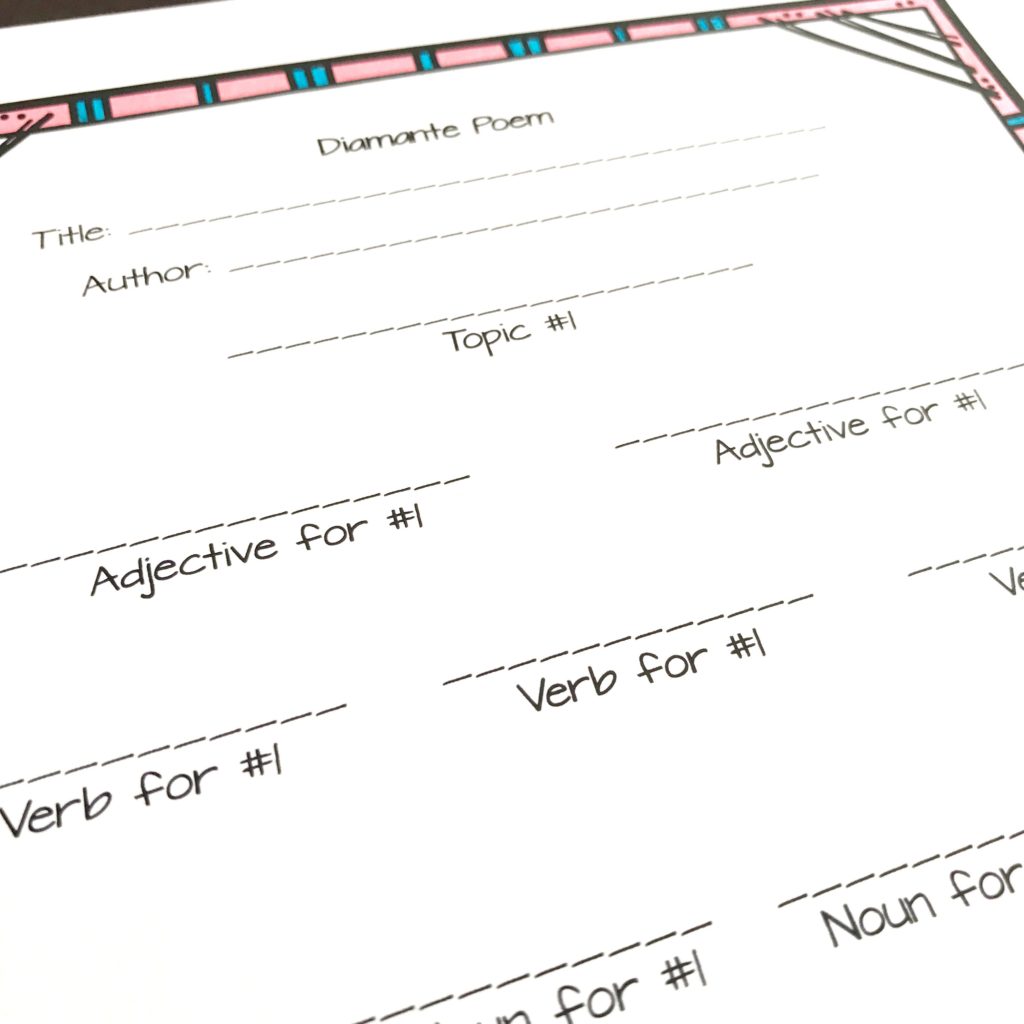
Use Poetry Templates:
Many styles of poetry use a certain format.  Using templates allows learners to really focus on word choice. Learners don't have to focus on the structure with templates.  Giving access to a thesaurus and dictionary will help writers find the best words to fit their poem.


poetry templates
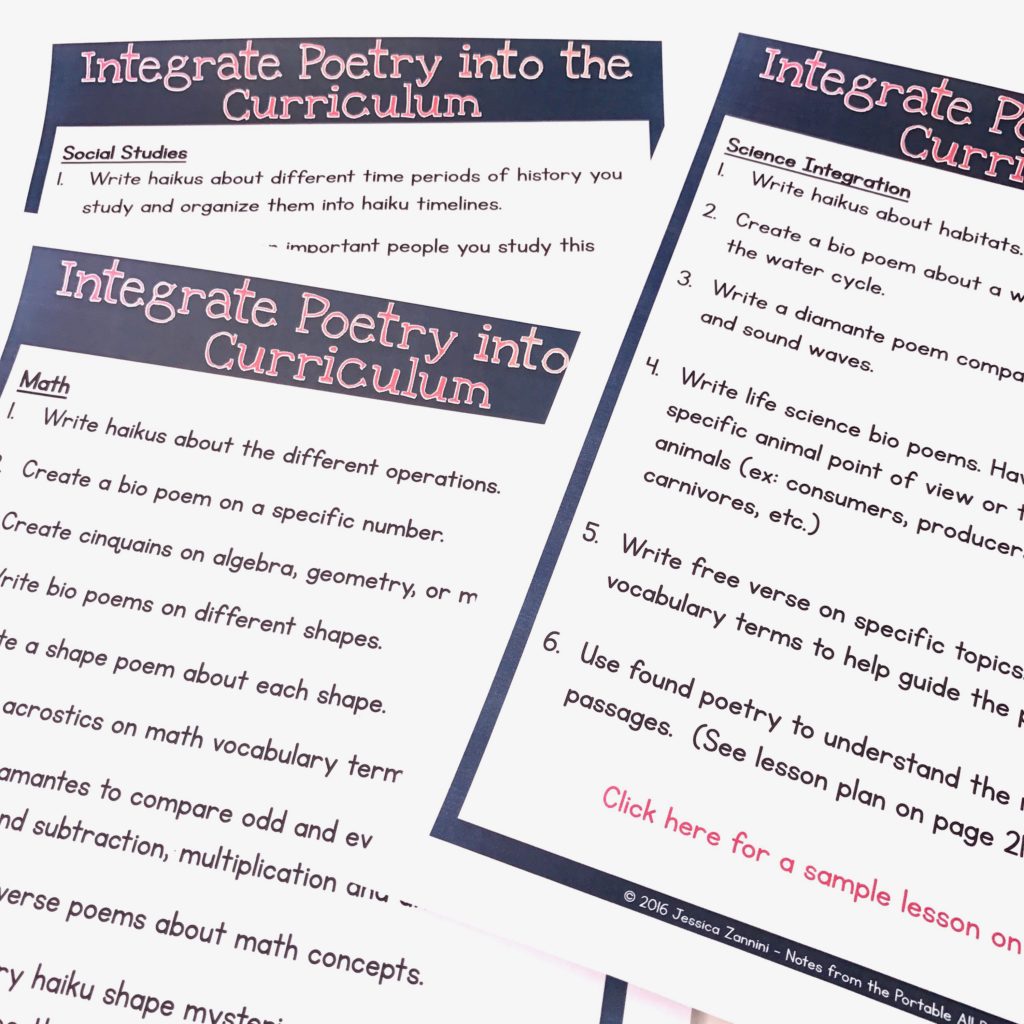
Integrate Other Subjects:
Poetry doesn’t have to be limited to just literacy lessons. You can easily integrate poetry into the content areas. For example, in math you can write diamante poems about the different operations, bio poems about shapes, and acrostics for key vocabulary terms.  You can get plenty of suggestions in this


Integrate poetry ideas
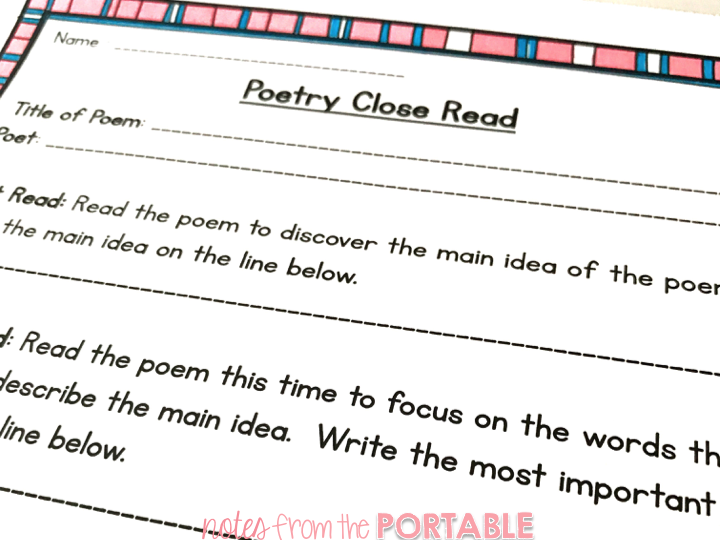
Use Close Reads
A poetry close read can help readers make inferences and connections. This simple close read guide can be used with any poem. The questions guide readers to understanding the parts of poetry, identify key terms, and search for main idea.


Poetry Close Read for Any Poem
Use Poetry in Lessons and Centers
Make poetry part of your guided reading lessons and literacy centers. Keep it up and running with a poetry book basket and the poetry close read.  Want poetry book suggestions?


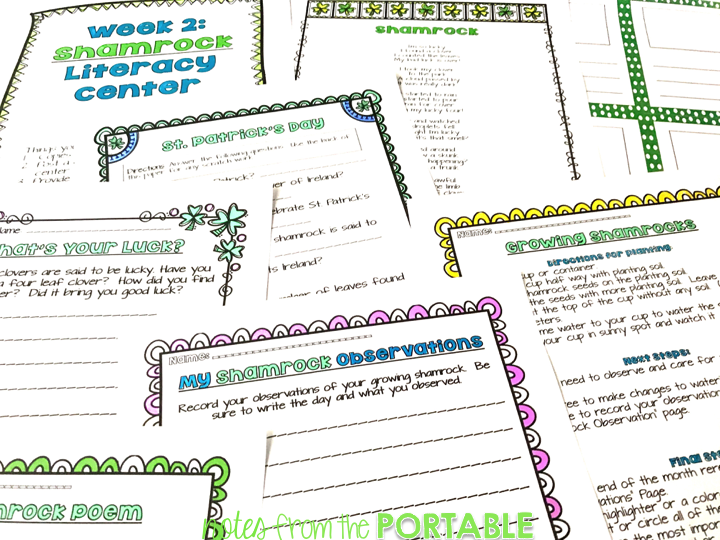
Do you want poetry literacy centers that are already prepared?  These monthly poems will allow for you to cover all holidays and seasonal themes. A test-prep/close read guide, written response, poetry writing lesson, and content area connection is provided for each poem.


March Poetry Literacy Center
Read Poetry During Read Aloud Time
Use poetry as part of your daily read aloud. Poetry is perfect for read alouds especially on those days when you are running short on time.  Check out this article to get suggestions of poems that will keep your students reading poetry all year long. Each month includes a FREE set of questions and activities.


Found Poetry
Use found poetry to help students identify the main idea of a passage. Have students highlight the important words and phrases as they read. Then cut out the highlighted words and organize them into a poem.
Found Poetry


Create a Wall Display
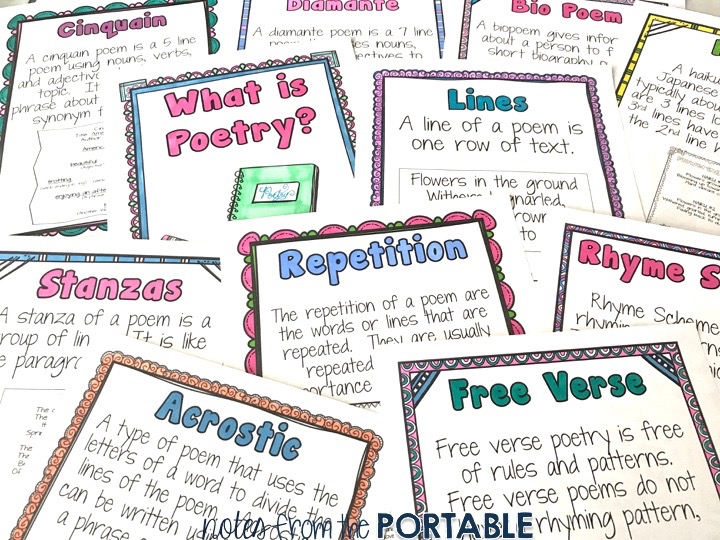
Keeping up a poetry word wall is a great way to help students learn those important terms. Put it up near your literacy center.  This poetry word wall has terms and examples.  You can color to meet your classroom decor or for student notebooks.  Or just print and go.


poetry word wall


Want to save this article?  Pin this!


Thursday, March 16, 2017

March Reading Challenge


Hello to Spring!

I love this time of year as the flowers emerge from their winter beds and cherry blossoms bloom with such eye-catching colors. Spring is a time for renewal and possibilities. The school year isn't quite over, so why not catch your students' interests in a Reading Challenge? March is National Reading Month, by the way.

I have an idea to share with you that I usually start at the beginning of the year to help the students branch out with their reading interests. But it will be perfect for this time of year to get them thinking outside of the Reading Box.

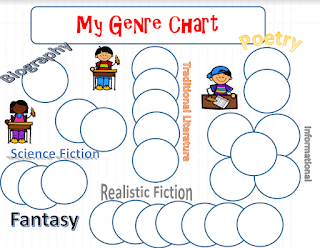
If you click on the image below it will take you to a Google Doc that you can download and share with your kiddos.

https://drive.google.com/file/d/0B_ZStSfotwLiVDF0Z01ON0NDT00/view?usp=sharing


You can set a time limit, such as by the end of the month, in order to complete the challenge. There are several genres with various numbers of circles to fill in for each. I have mine write the title of the books they read and then color in to show they have completed it. If you'd like, they can start thinking of some books they'd like to read and maybe write in the titles ahead of time and then be able to color them in when they've read them. Remind them not to color too darkly to cover over their titles.

You could create a class chart to hang in the room. Students can color in a graph with different colors for each genre above their name to challenge each other to read more.

Prizes such as a small take-home book you can pick up at Goodwill, or Dollar Store treats can be handed out for those students who complete so many books by the end of the time you set.

Let me know how this works out for you. I'd love to hear what creative ways you encouraged your students to read this month!


Something to pin...


Thursday, March 2, 2017

Women's History Month: Read-Alouds and Mentor Texts


This month is Women's History Month! I am going to share some fantastic books you will want to share with your students this month to empower and amaze them. **This post includes Amazon affiliate links. If you choose to use the affiliate link, the couple of cents I earn from Amazon per purchase goes to fund future giveaways!**

If you haven't heard about the amazing Malala Yousafzai, this will be a great introduction for you AND your students! Many of your students may not realize that school is not a "normal occurrence" for people worldwide. The corageous Malala spoke out for education for every girl and was almost killed by the Taliban in the process.

With the popularity of the movie, get the young readers' edition of Hidden Figures to teach students all about the four African-American female mathematicians at NASA who helped achieve some of the greatest moments in our space program.


This book about Rosa Parks is not the glossed-over version you might find in other stories. The book is a tribute to Rosa, and the images in this book are gorgeous!!


Here is a great book to share about the famous woman aviator, and is sure to inspire your students to do what they love, even when the odds are against them.


Yet another inspiring book- Wilma Unlimited is the story of Wilma Rudolph who overcame polio and paralysis to become the first American woman to earn three gold medals in the Olympics!


Ready for some amazing women who took a stand in politics? Supreme Court justice Ruth Bader Ginsburg is an awesome woman to share about when discussing how disagreeing CAN be done respectfully and CAN make a difference. 


Elizabeth Cady Stanton was another woman who stood up for what she knew was right, and wouldn't take no for an answer. She fought for women's rights and changed America forever.


This is a great book to pair with Elizabeth Leads the Way! The book is from the point of view of a little girl, Bessie, who learns that small actions can lead to big changes.


Players in Pigtails is a great book to share with students to show that girls and boys don't have "girl" and "boy" activities. The book is about the All American Girls Professional Baseball League and celebrates the girls' love of the game.


Last, but not least, share the book about one of the world's most inspiring women, Jane Goodall. Jane's life has been all about empowering people to make a difference for all living things, and in this book, as a little girl, it will help children realize they truly can make a difference.


PIN FOR FUTURE REFERENCE:
Teach about amazing women in March during Women's History Month using these fantastic mentor texts and read-alouds.